Author name: baggiebot.ai@gmail.com

Technical Blogs

Custom Trailer Manufacturing Process: From Design to Delivery

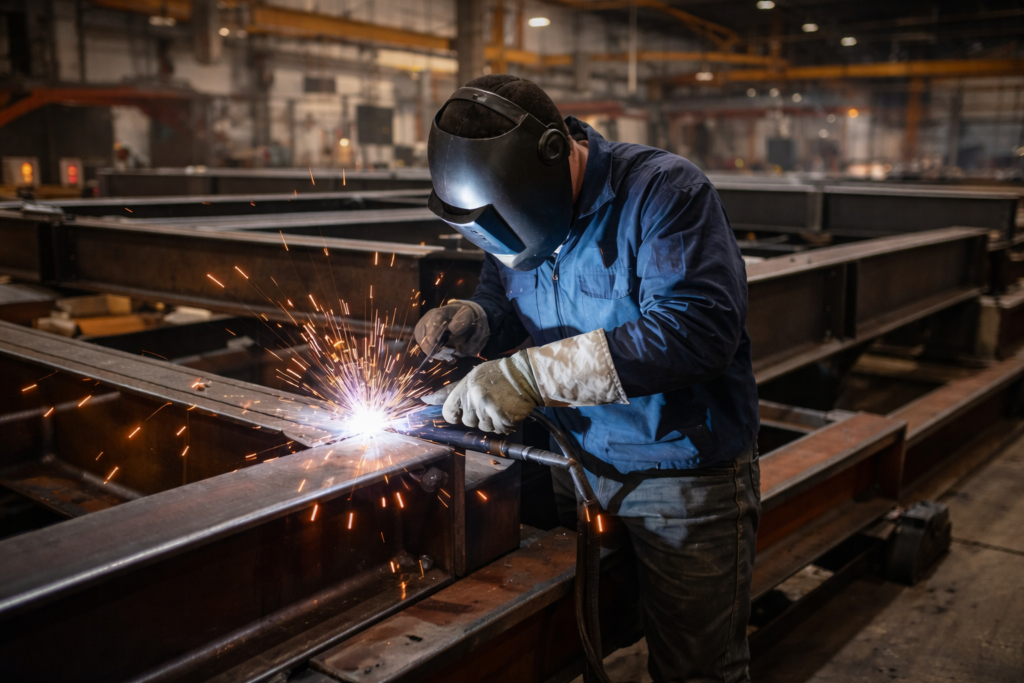
Customized trailers are essential for industries like mining, construction, wind energy, and heavy logistics. Unlike standard trailers, custom builds require detailed engineering and precision fabrication. Here’s how a professional manufacturing process works. Step 1: Requirement Analysis Type of cargo Load weight Route conditions Height restrictions Turning radius Engineering drawings are created using CAD software. Step 2: Structural Design 4 3D Modeling Stress Analysis Axle placement design Suspension selection Step 3: Fabrication CNC plasma cutting Heavy-duty welding Frame assembly Cross-member reinforcement Step 4: Axle & Suspension Installation Mechanical or Air suspension Brake system integration ABS system (if required) Step 5: Surface Treatment & Painting Sand blasting Anti-corrosion primer Industrial-grade paint coating Step 6: Quality Inspection & Load Testing Dimensional accuracy check Weld testing Load testing Road test Conclusion Customized trailer manufacturing requires precision engineering, quality materials, and strict inspection standards. Yashwant Trailers specializes in engineered-to-order heavy-duty trailers tailored to your operational needs.

Technical Blogs

How Trailer Load Capacity is Calculated: Engineering Principles Explained

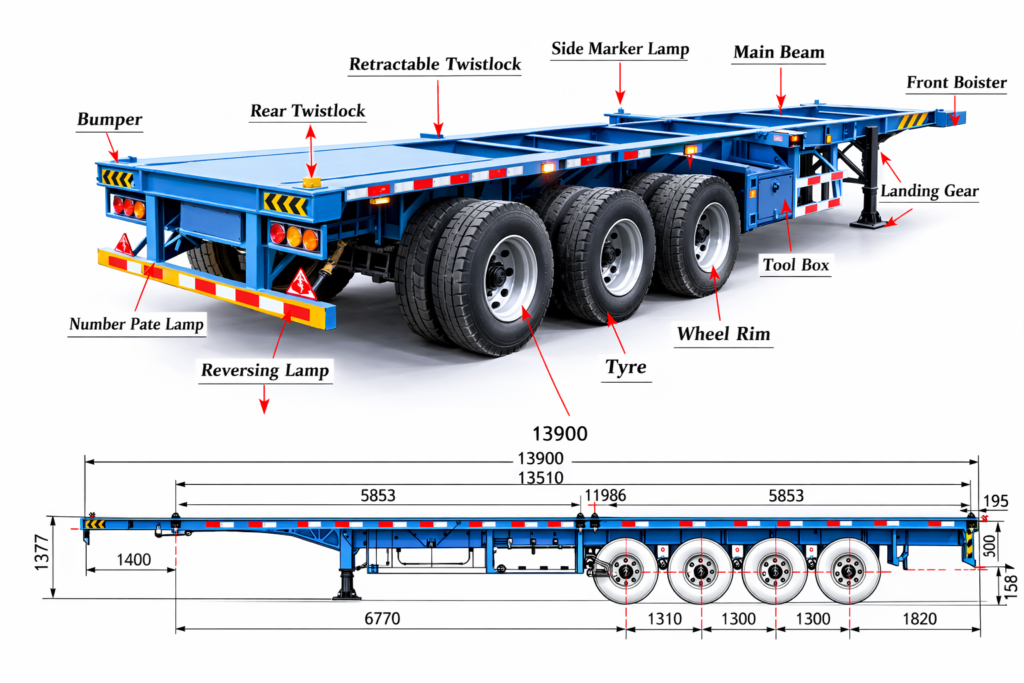
Load capacity is not just about axle count. It depends on engineering design, material strength, and load distribution. Understanding these principles helps businesses choose the right trailer and avoid structural failure. 1. Axle Load Calculation Each axle supports a specific weight based on: Axle rating (e.g., 10T, 12T, 16T) Number of axles Suspension design Example: If a trailer has 4 axles rated at 12 tons each: Total theoretical capacity = 4 × 12 = 48 Tons However, practical load capacity depends on frame strength. 2. Chassis Strength The chassis is the backbone of the trailer. Key factors: High tensile steel grade I-beam or box section design Cross-member spacing Welding quality Finite Element Analysis (FEA) is often used to test stress points in heavy-duty trailers. 3. Load Distribution Improper load placement can: Overstress one axle Cause structural bending Reduce tire life Engineers calculate: Center of gravity Load moment Bending stress 4. Legal Compliance Load capacity must also comply with: Regional transport authority regulations Axle load limits Road safety standards
Technical Blogs

Semi Bed vs Low Bed Trailer: Technical Comparison for Heavy Equipment Transport

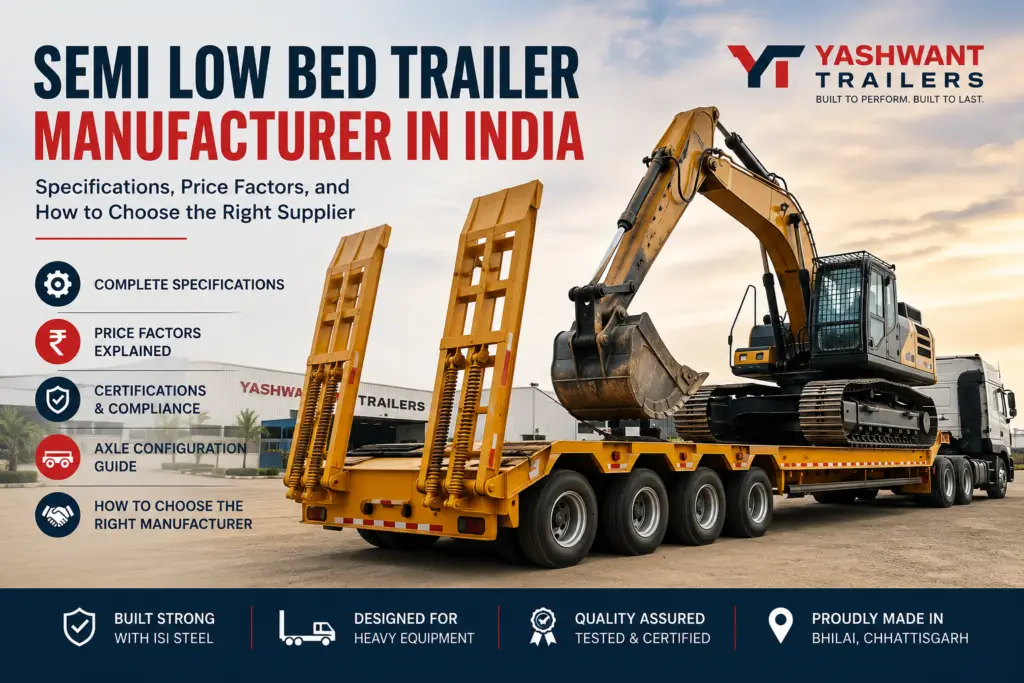
Choosing the correct trailer is critical for transporting heavy machinery, construction equipment, and oversized cargo. Two of the most commonly used heavy-duty trailers are Semi Bed Trailers and Low Bed Trailers. While they may look similar, their design, load capacity, and operational advantages differ significantly. This guide explains the technical differences to help fleet owners and contractors make the right decision. A Semi Bed Trailer is a flat platform trailer with moderate deck height, commonly used for transporting industrial materials and medium-heavy machinery. Technical Specifications: Deck Height: 1200mm – 1500mm Load Capacity: 20 – 40 Tons (depending on axle configuration) Axle Configuration: 2 to 4 axles Suspension: Mechanical / Air Suspension Frame: High-tensile steel fabricated chassis Best Used For: Steel coils Fabricated structures Construction materials Medium-weight equipment What is a Low Bed Trailer? A Low Bed Trailer has a significantly lower deck height, allowing transportation of taller and heavier equipment while maintaining legal height limits. Technical Specifications: Deck Height: 500mm – 900mm Load Capacity: 40 – 100+ Tons Hydraulic or Mechanical Ramps Reinforced chassis for concentrated load Best Used For: Excavators Cranes Transformers Mining equipment Key Technical Differences Feature Semi Bed Low Bed Deck Height Medium Very Low Load Capacity Medium Very High Center of Gravity Moderate Very Stable Oversized Equipment Limited Ideal Cost Lower Higher Engineering Insight Low bed trailers reduce the center of gravity, which increases road stability. This is critical for transporting tall equipment. Semi bed trailers are more economical and suitable for general heavy cargo. Conclusion If height clearance and stability are key concerns, a low bed trailer is the ideal choice. For general industrial transport, semi bed trailers offer efficiency and cost-effectiveness. At Yashwant Trailers, we manufacture both standard and customized solutions based on your load requirements.

Scroll to Top