
If you’ve requested quotes from two or three trailer manufacturers, you’ve probably noticed the numbers don’t match sometimes by a significant margin. That’s not manufacturers being arbitrary. High bed trailer pricing depends on several engineering and material factors that aren’t always obvious from a spec sheet alone. Here’s what actually drives the cost, so you can evaluate quotes with confidence.
What Determines a High Bed Trailer Price in India?
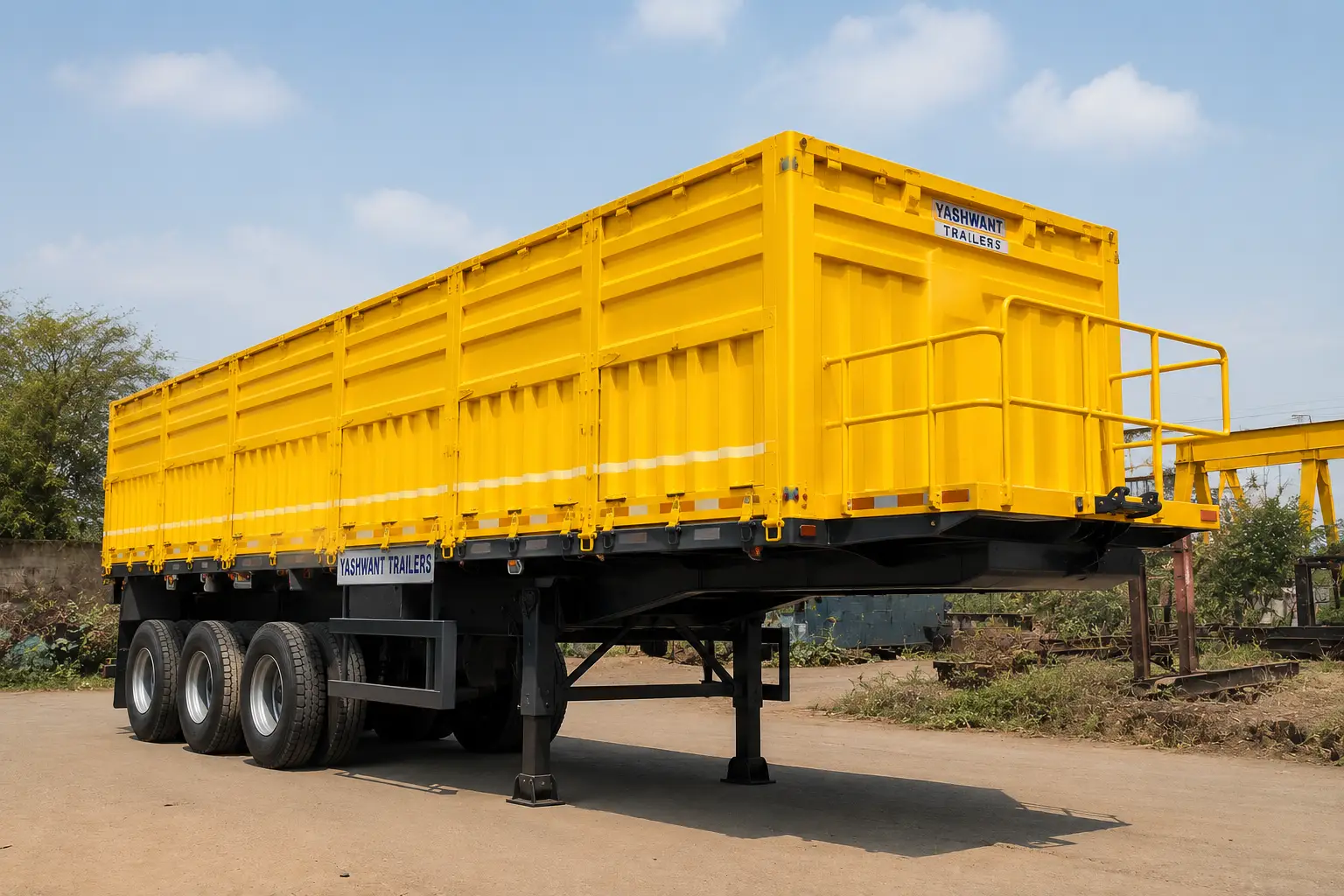
1. Deck Length and Load Capacity
Longer decks and higher rated load capacities require thicker chassis members and more structural steel, which directly increases both material and fabrication cost. A trailer rated for 20 tons will cost noticeably less than one rated for 40 tons, even if the two look similar in overall length. Buyers sometimes over specify load capacity “to be safe,” which inflates the price without adding real value it’s worth calculating your actual maximum load before finalizing a spec.
2. Axle Configuration
More axles distribute load better and allow higher legal load capacity, but each additional axle adds cost not just for the axle unit itself, but for the suspension, braking system, and tyres that come with it. A 2-axle trailer and a 4-axle trailer serving the same route can differ substantially in price. The right axle count should be matched to your actual cargo weight and the routes you run, not chosen as a blanket “more is safer” decision.
3. Steel Grade and Chassis Design
High tensile steel costs more upfront than mild steel, but it allows a lighter, stronger chassis which can improve fuel efficiency and payload capacity over the trailer’s working life. A cheaper quote sometimes reflects a heavier, lower grade chassis rather than better value. It’s a fair question to ask any manufacturer directly: what steel grade is used, and what’s the tensile strength rating?
4. Suspension Type
Mechanical (leaf spring) suspension is the more economical option upfront and works well for standard industrial routes. Air suspension costs more initially but offers a smoother ride, reduces cargo damage risk, and generally holds up better under frequent long haul use. The right choice depends less on budget alone and more on your typical routes, road conditions, and how sensitive your cargo is to vibration.
5. Braking System
A standard braking system is the lower cost option. ABS (Anti-lock Braking System) adds to the base price but is increasingly required for certain cargo types, tonnage thresholds, and interstate routes under current transport regulations so for many buyers it’s less optional than it used to be.
6. Customization
Standard configurations are priced lower than trailers built to custom specifications unusual deck heights, special ramps, non standard axle spacing, or reinforced sections for specific machinery. If you’re transporting oversized or unusually shaped equipment (certain mining machinery, transformers, prefabricated structures), expect a custom quote rather than a standard catalog price, since the engineering work itself takes more time.
Why Two Quotes for “The Same Trailer” Can Differ
It’s common to receive two quotes that look like they’re for an identical trailer but differ by a meaningful amount. Usually the difference comes down to one or more of these:
- Steel grade used (mild steel vs. high-tensile steel) Whether the price includes ABS and air suspension, or only a base mechanical setup Warranty length and what it actually covers Whether the chassis is fabricated in-house or sourced from a third party and assembled.
A lower price isn’t automatically a worse deal, and a higher price isn’t automatically a better one. The only reliable way to compare fairly is to ask each manufacturer for a line-by-line breakdown of what’s included, rather than comparing a single total figure.
Questions to Ask Before Comparing Prices
- What steel grade is used in the chassis, and what’s its tensile rating? Is the suspension mechanical or air, and can I choose based on my route? Is ABS included in this price, or is it an add-on? What’s the warranty period, and what specifically does it cover? Is the chassis fabricated in-house, or sourced externally and assembled? What’s the expected lead time for delivery at this specification?
Get an Accurate Quote for Your Requirement
At Yashwant Trailers, we’ve been manufacturing high bed trailers in Bhilai since 2004, and we provide a detailed cost breakdown with every quote so you know exactly what you’re paying for and why.
Frequently Asked Questions
1. What is the average price range for a high bed trailer in India?
For a standard 2-3 axle configuration, prices typically range from ₹14 lakh to ₹16 lakh depending on specifications.
2. Does a higher price always mean better quality?
Not necessarily. Price differences usually reflect steel grade, suspension type, and included features rather than build quality alone. It’s worth asking for a specification breakdown rather than judging by price alone.
3. Can I get a custom high bed trailer within a specific budget?
In most cases, yes. Specifications like axle count and suspension type can be adjusted to fit a target budget while still meeting your core load requirements. It’s best to share your budget constraints directly with the manufacturer so they can recommend the right trade offs.
4. How long does it take to manufacture a high bed trailer?
Standard configurations are typically delivered within 10-12 days. Custom builds with non standard specifications may take longer, depending on the engineering work involved. All our trailers come with a 4-year chassis warranty.